
 MVA KIT
 Subtotal: KSh 3,500.00
-3%


Uncategorized
Cardiac defibrillator
A cardiac defibrillator is a device that delivers an electric shock to the heart to restore a normal rhythm or correct dangerous arrhythmias
-
Automated external defibrillators (AEDs)
A portable device that can detect abnormal heart rhythms and deliver a shock to help save a life. AEDs are often found in public places, such as schools, malls, and gyms, and are also carried by police and ambulance crews.
-
Implantable cardioverter-defibrillators (ICDs)
A device that’s surgically implanted in the chest or under the skin at the side of the chest. ICDs detect life-threatening arrhythmias and send an electric shock to change the heart’s rhythm back to normal. There are two main types of ICDs: traditional ICDs, which are placed in the chest, and subcutaneous ICDs (S-ICDs), which are placed under the skin.
A defibrillator can help restart a heart that has stopped beating due to cardiac arrest, also known as sudden cardiac arrest (SCA). SCA is fatal unless treated immediately with CPR and a defibrillator
A cardiac defibrillator is a life-saving medical device used to restore a normal heart rhythm in individuals experiencing sudden cardiac arrest
Availability:
- Kenya Suppliers:
- Medstock Supplies
 Mama Ngina Street, Transnational Plaza, 2nd Floor, Nairobi
 Call/WhatsApp: 0722641512
Follow us on Facebook: https://www.facebook.com/medstockltdFOR MORE ORDERS GET THEM AT https://medstock.co.ke/product-category/clinical-equipments/
- Medstock Supplies
KSh 160,000.00 KSh 165,000.00
❤️⚡ Cardiac Defibrillator
A cardiac defibrillator is a life-saving medical device used to restore a normal heart rhythm in individuals experiencing sudden cardiac arrest (SCA) or life-threatening arrhythmias like ventricular fibrillation (VF) and ventricular tachycardia (VT).
It delivers a controlled electric shock to the heart, helping reset the electrical activity and reestablish effective heartbeat.
🩺 Types of Defibrillators:
| Type | Description | Use Case |
|---|---|---|
| Automated External Defibrillator (AED) | Portable, easy-to-use with voice prompts | Public places, schools, airports, first responders |
| Manual Defibrillator | Requires trained personnel to interpret ECG and adjust settings | Hospitals, ambulances |
| Implantable Cardioverter Defibrillator (ICD) | Surgically implanted device | Long-term management for patients at risk of arrhythmias |
| Wearable Cardioverter Defibrillator (WCD) | Vest-like external device worn temporarily | Used until an ICD is implanted or no longer needed |
⚙️ Key Features (AED / Manual Defibrillator):
Shock Delivery System
– Delivers controlled energy (typically 150–360 joules)
ECG Monitoring (Manual & Advanced AED)
– Allows rhythm interpretation and shock guidance
Voice/Visual Prompts (AED)
– Guides untrained users through the process
Biphasic Technology
– More efficient and safer shock delivery than older monophasic devices
Rechargeable Battery / AC Power
– Ensures readiness in emergencies
Pediatric Mode or Pads
– Safe use on children
🛒 Availability:
- Kenya Suppliers:
- Medstock Supplies
Mama Ngina Street, Transnational Plaza, 2nd Floor, Nairobi
Call/WhatsApp: 0722641512
Follow us on Facebook: https://www.facebook.com/medstockltdFOR MORE ORDERS GET THEM AT https://medstock.co.ke/product-category/clinical-equipments/
- Medstock Supplies
🚑 Common Use Areas:
- Emergency departments
- Ambulances
- Airports, malls, offices (AED)
- Schools and sports centers
- Homes of patients at risk (ICD/WCD)
⚠️ Important Notes:
- AEDs are designed for public use, no medical training required
- Regular maintenance is critical—check battery, electrode pads, and self-tests
- Manual defibrillators require qualified personnel (nurses, paramedics, doctors)
✅ Ideal For:
- Hospitals and clinics
- Emergency response teams
- Schools, gyms, hotels, large public facilities
- Patients with heart conditions (for ICDs/WCDs)
A cardiac defibrillator is a device that delivers an electric shock to the heart to restore a normal rhythm or correct dangerous arrhythmias
-
Automated external defibrillators (AEDs)
A portable device that can detect abnormal heart rhythms and deliver a shock to help save a life. AEDs are often found in public places, such as schools, malls, and gyms, and are also carried by police and ambulance crews.
-
Implantable cardioverter-defibrillators (ICDs)
A device that’s surgically implanted in the chest or under the skin at the side of the chest. ICDs detect life-threatening arrhythmias and send an electric shock to change the heart’s rhythm back to normal. There are two main types of ICDs: traditional ICDs, which are placed in the chest, and subcutaneous ICDs (S-ICDs), which are placed under the skin.
A defibrillator can help restart a heart that has stopped beating due to cardiac arrest, also known as sudden cardiac arrest (SCA). SCA is fatal unless treated immediately with CPR and a defibrillator
Related products
-
Uncategorized, Blood Pressure Monitors, Clinical Equipments, Dental Equipment, Diagnostic Equipment, Digital Thermometer, Implantable Devices, Laboratory Equipment, Medical Equipments
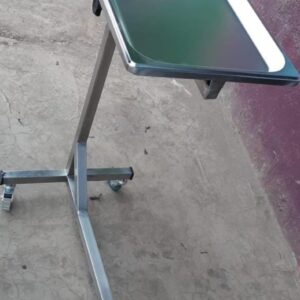
Mayo Trolley
 Uncategorized, Blood Pressure Monitors, Clinical Equipments, Dental Equipment, Diagnostic Equipment, Digital Thermometer, Implantable Devices, Laboratory Equipment, Medical Equipments
Mayo Trolley
Mayo Trolley
A Mayo Trolley is a height-adjustable stainless-steel tray stand used in medical and surgical settings to hold sterile instruments and supplies within easy reach of a surgeon or nurse during procedures. It is designed for use directly over the operating table and is essential in both minor and major surgical setups.
Key Features
- Stainless Steel Construction
Corrosion-resistant, easy to clean, and ideal for sterile environments. - Height Adjustable Frame
Which allows the tray to be positioned over the patient or procedure table for convenience. - Removable Tray
- Stable Base with Casters
Smooth-rolling castor wheels provide mobility and lockable stability during use.Medstock Supplies
 Mama Ngina Street, Transnational Plaza, 2nd Floor, Nairobi
 Call/WhatsApp: 0722641512
Follow us on Facebook: https://www.facebook.com/medstockltdFOR MORE ORDERS GET THEM AT https://medstock.co.ke/product-category/clinical-equipments/
SKU: n/a - Stainless Steel Construction
-
Uncategorized, Diagnostic Equipment
Led single arm
LED SINGLE ARM SURGICAL LIGHTThe LED Single Arm Surgical Light is a high-performance lighting system designed for use in operating rooms, minor procedure areas, and examination rooms. It provides bright, focused, and shadow-free illumination, ensuring optimal visibility during surgical and clinical procedures. The single-arm design offers flexibility, easy positioning, and space-saving installation.
🩺 PRODUCT DESCRIPTION
- Type: Ceiling-mounted / Wall-mounted / Mobile (single arm configuration)
- Light Source: High-intensity LED technology
- Illumination Intensity: Adjustable up to 160,000 lux (varies by model)
- Color Temperature: Adjustable (typically 3,500K – 5,000K)
- Light Field Diameter: Uniform, large-area coverage
- Color Rendering Index (CRI): ≥ 90 for true tissue color distinction
- Arm Type: Articulated, spring-balanced or gas-spring single arm for smooth movement
- LED Lifespan: ≥ 50,000 hours
- Control Panel: Touch or membrane control for intensity and color adjustment
- Power Supply: 110V/220V AC, 50/60Hz
- Backup: Optional battery backup for uninterrupted power
- Medstock Supplies
Mama Ngina Street, Transnational Plaza, 2nd Floor, Nairobi
Call/WhatsApp: 0722641512
Follow us on Facebook: https://www.facebook.com/medstockltdFOR MORE ORDERS GET THEM AT https://medstock.co.ke/product-category/clinical-equipments/
SKU: n/a -
Uncategorized, Blood Pressure Monitors, Clinical Equipments, Dental Equipment
Medical cap(Blue/White)
 Uncategorized, Blood Pressure Monitors, Clinical Equipments, Dental Equipment
Medical cap(Blue/White)
Medical caps, also known as surgical head caps or bouffant caps, have multiple uses in a medical setting, including
-
- Protecting the patient and medical staff: Medical caps protect both the patient and medical staff from the transfer of microorganisms, body fluids, and particulate material.
- Keeping the surgical area clean: Medical caps contain the wearer’s hair to keep the surgical area clean.
Preventing contamination: Medical caps are worn to prevent hair and scalp from contaminating sterile environments and reducing the risk of surgical site infections (SSIs) for patients
- Medical caps are typically made of non-woven fabric and secured around the head with an elastic grip. They are designed to be comfortable and can be breathable and flexible. Some medical caps are reusable and can be laundered after each use.
- Medstock Supplies
Mama Ngina Street, Transnational Plaza, 2nd Floor, Nairobi
Call/WhatsApp: 0722641512
Follow us on Facebook: https://www.facebook.com/medstockltdFOR MORE ORDERS GET THEM AT https://medstock.co.ke/product-category/clinical-equipments/
DELIVED BY MEDSTOCK SUPPLIES SAME DAY
- Protecting the patient and medical staff: Medical caps protect both the patient and medical staff from the transfer of microorganisms, body fluids, and particulate material.
SKU: n/a -
-
Uncategorized, Laboratory Equipment
Closed cuff
Closed Cuff
A Closed Cuff refers to a design feature commonly found on medical gowns, lab coats, and coveralls where the sleeve ends with a knitted or elasticated cuff that fits snugly around the wrist. This design improves barrier protection and comfort, especially in sterile or high-risk environments.
🩺 Product Description
- Material: Soft, elastic fabric (often polyester or cotton blend for reusable gowns; spandex/elastic in disposables)
- Integration: Seamlessly attached to the gown sleeve to prevent slippage
- Fit: Snug, wrist-hugging design that allows gloves to fit securely over the cuff
- Types of Garments: Surgical gowns, isolation gowns, protective suits, and lab coats
✅ Key Features
- Enhanced Barrier Protection: Prevents exposure of skin at the wrist area
- Glove Compatibility: Allows gloves to be pulled over the cuff for a tighter seal
- Prevents Slippage: Keeps sleeves in place during procedures
- Comfortable Wear: Reduces irritation compared to open or loose sleeves
- Sterile & Non-Sterile Options: Available for different medical settings
- Medstock Supplies
Mama Ngina Street, Transnational Plaza, 2nd Floor, Nairobi
Call/WhatsApp: 0722641512
Follow us on Facebook: https://www.facebook.com/medstockltdFOR MORE ORDERS GET THEM AT https://medstock.co.ke/product-category/clinical-equipments/
SKU: n/a

