
Fetal Scope
A fetal doppler is a handheld device that uses sound waves to measure a baby’s heart rate. In a hospital setting, a fetal doppler is used for a variety of purposes, including:
-
Prenatal visits
A healthcare provider may use a fetal doppler to count a baby’s heart rate during prenatal visits.
-
Labor and delivery
A healthcare provider may use a fetal doppler to monitor a baby’s heart rate during labor and delivery. They may also use a continuous Doppler ultrasound device, which attaches to the belly with an elastic strap and sends the baby’s heart rate to a monitor.
-
Identify at-risk fetuses
A fetal doppler can help identify fetuses that are at risk so that clinical interventions can be applied.
-
Check fetal well-beingA fetal doppler can help determine how a baby is reacting to the mother’s environment. For example, a fetal doppler can indicate if the mother is stressed, anemic, or has an infection.
- Medstock Supplies
 Mama Ngina Street, Transnational Plaza, 2nd Floor, Nairobi
 Call/WhatsApp: 0722641512
Follow us on Facebook: https://www.facebook.com/medstockltdFOR MORE ORDERS GET THEM AT https://medstock.co.ke/product-category/clinical-equipments/
MEDSTOCK SUPPLIES DELIVER THIS COUNTRY WIDE WITH AFFORDABLE PRICES - Medstock Supplies
KSh 500.00
Fetal Doppler
A Fetal Doppler is a non-invasive, handheld ultrasound device used to detect and monitor the fetal heartbeat during pregnancy. Commonly used from 12 weeks of gestation onward, it allows healthcare professionals—and sometimes expectant parents—to hear the baby’s heartbeat for reassurance and early detection of abnormalities.
Key Features
- Ultrasound Frequency: Typically 2.5 MHz or 3.0 MHz probe for optimal fetal heart detection
- Clear Heartbeat Detection: Detects fetal heart rate (FHR) as early as 10–12 weeks of gestation
- Digital Display: LCD screen shows real-time FHR readings (in BPM)
- Audio Output: Built-in speaker or headphone jack for listening
- Signal Indicators: Visual heartbeat waveform or signal strength indicators
- Power Supply: Battery-operated (commonly 2× AA or rechargeable lithium battery)
- Auto Shut-Off: Conserves power when not in use
- Portability: Lightweight, compact design ideal for clinics or home use
Clinical Applications
- Antenatal Clinics – routine checkups to confirm fetal well-being
- Home Monitoring – for expectant mothers under midwife guidance
- OB/GYN Offices – for quick fetal assessments before or between ultrasounds
- Mobile Clinics & Rural Health Programs
What’s in the Box
- Fetal Doppler main unit
- Ultrasound probe (usually detachable)
- User manual
- Gel (optional in some kits)
- Batteries (included or optional depending on model)
Benefits
- Safe: Uses low-intensity ultrasound—no radiation
- Reassuring: Offers peace of mind for expectant parents
- Affordable: Budget-friendly models available for clinics and personal use
- Convenient: Instant heartbeat detection without needing a full ultrasound scan
A fetal doppler is a handheld device that uses sound waves to measure a baby’s heart rate. In a hospital setting, a fetal doppler is used for a variety of purposes, including:
A healthcare provider may use a fetal doppler to count a baby’s heart rate during prenatal visits.
A healthcare provider may use a fetal doppler to monitor a baby’s heart rate during labor and delivery. They may also use a continuous Doppler ultrasound device, which attaches to the belly with an elastic strap and sends the baby’s heart rate to a monitor.
A fetal doppler can help identify fetuses that are at risk so that clinical interventions can be applied.
- Medstock Supplies
Mama Ngina Street, Transnational Plaza, 2nd Floor, Nairobi
Call/WhatsApp: 0722641512
Follow us on Facebook: https://www.facebook.com/medstockltdFOR MORE ORDERS GET THEM AT https://medstock.co.ke/product-category/clinical-equipments/
Related products
-
Uncategorized
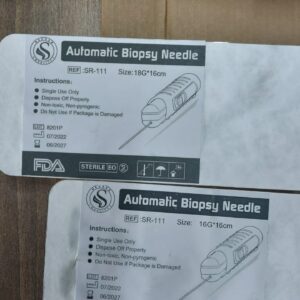
Automatic biopsy needle
-
Automatic Biopsy Needle – Overview
An Automatic Biopsy Needle is a specialized medical device used to obtain tissue samples from internal organs or masses for histological or cytological analysis. It features a spring-loaded, automated mechanism that ensures quick, accurate, and minimally invasive sampling, commonly used in core needle biopsies.
Product Description
- Design:
- Compact, lightweight, ergonomic pen-like device
- Spring-loaded firing mechanism for rapid tissue capture
- Integrated stylet (inner needle) and cannula (outer needle)
- Ultrasound/MRI-compatible markings on the cannula
- Material:
- Medical-grade stainless steel needle
- Plastic polymer body with firing mechanism
- Sterile and often single-use (disposable)
- Needle Sizes:
- Gauge: Typically ranges from 14G to 20G
- Length: 10 cm to 22 cm, depending on the organ/site
Medstock Supplies
Mama Ngina Street, Transnational Plaza, 2nd Floor, Nairobi
Call/WhatsApp: 0722641512
Follow us on Facebook: https://www.facebook.com/medstockltdFOR MORE ORDERS GET THEM AT https://medstock.co.ke/product-category/clinical-equipments/
- Design:
SKU: n/a -
-
Uncategorized, Clinical Equipments
First aid kit
First Aid Kit
A First Aid Kit is a collection of essential medical supplies used to provide immediate care for minor injuries, wounds, or medical emergencies. It is a critical safety item in homes, schools, offices, vehicles, hospitals, and outdoor settings.
🧰 Product Description
- Contents (varies by kit size and use but typically includes):
- Adhesive bandages (assorted sizes)
- Sterile gauze pads and adhesive tape
- Antiseptic wipes and disinfectants
- Scissors and tweezers
- Gloves (non-latex)
- Pain relievers (e.g., paracetamol)
- CPR face shield or mask
- Burn cream, eye wash, and cold packs
- First aid manual or instruction card
- Packaging: Durable, compact, and clearly labeled box or bag—portable and organized with compartments.
- Purpose: Enables quick response to cuts, burns, sprains, allergic reactions, and other minor injuries.
- Variants: Available in basic, standard, or comprehensive kits tailored for personal, workplace, industrial, or travel use.
.
Available at:
- Medstock Supplies Ltd (📞 0722641512)
- Medstock Supplies
Mama Ngina Street, Transnational Plaza, 2nd Floor, Nairobi
Call/WhatsApp: 0722641512
Follow us on Facebook: https://www.facebook.com/medstockltdFOR MORE ORDERS GET THEM AT https://medstock.co.ke/product-category/clinical-equipments/
SKU: n/a - Contents (varies by kit size and use but typically includes):
-
Uncategorized
Digital thermometer
Digital Thermometer
A Digital Thermometer is an electronic device used to measure body temperature quickly and accurately. It provides a digital readout and is widely used in homes, hospitals, and clinics for both adults and children.
🩺 Product Description
- Display:
- Clear LCD screen shows temperature in °C or °F
- Measurement Sites:
- Oral, axillary (underarm), or rectal (depending on design)
- Some models are multi-use
- Accuracy:
- Typically accurate within ±0.1°C
- Power:
- Operates on a button cell battery (usually replaceable)
- Build:
- Made of non-toxic plastic, waterproof models available
- Flexible tip options for comfort and safety
-
-
Medstock Supplies
Mama Ngina Street, Transnational Plaza, 2nd Floor, Nairobi
Call/WhatsApp: 0722641512
Follow us on Facebook: https://www.facebook.com/medstockltdFOR MORE ORDERS GET THEM AT https://medstock.co.ke/product-category/clinical-equipments/
-
SKU: n/a - Display:
-
Uncategorized
Breathing Circuit adult extended
Breathing Circuit Adult ExtendedAn Adult Extended Breathing Circuit is a medical-grade tubing system used to deliver gases (oxygen, air, anesthetics) to and from a patient during mechanical ventilation or anesthesia. The “extended” version refers to longer tubing, which provides flexibility in patient positioning, especially in operating rooms or ICU settings.
Product Description
- Components:
- Corrugated tubing (usually 1.8–2.5 meters in extended models)
- Y-piece connector
- Reservoir bag (1–2 liters for adults)
- Mask or endotracheal tube connector
- Inspiratory and expiratory limbs
- Elbow or swivel connector
- Optional humidification chamber or filter (HMEF)
Some uses of an expandable breathing circuit include:
-
Delivering gases
The circuit delivers a mixture of fresh gas, like oxygen and air, and anesthetic gases to the patient.
-
Removing carbon dioxide
The circuit removes carbon dioxide from the patient’s exhaled breath. This can be done by soda lime absorption or by washing out the carbon dioxide with fresh gas flow.
-
Controlling temperature and humidity
The circuit controls the temperature and humidity of the gas mixture that the patient breathes.
-
Monitoring
The circuit may have ports for monitoring the patient’s airway pressure, flow, volume, and gas sampling.
Medstock Supplies
Mama Ngina Street, Transnational Plaza, 2nd Floor, Nairobi
Call/WhatsApp: 0722641512
Follow us on Facebook: https://www.facebook.com/medstockltdFOR MORE ORDERS GET THEM AT https://medstock.co.ke/product-category/clinical-equipments/
Some benefits of an anesthesia breathing circuit include:SKU: n/a - Components: