-
×
 Automatic biopsy needle
1 × KSh 4,500.00
Automatic biopsy needle
1 × KSh 4,500.00
Subtotal: KSh 4,500.00

A cardiac defibrillator is a device that delivers an electric shock to the heart to restore a normal rhythm or correct dangerous arrhythmias
A portable device that can detect abnormal heart rhythms and deliver a shock to help save a life. AEDs are often found in public places, such as schools, malls, and gyms, and are also carried by police and ambulance crews.
A device that’s surgically implanted in the chest or under the skin at the side of the chest. ICDs detect life-threatening arrhythmias and send an electric shock to change the heart’s rhythm back to normal. There are two main types of ICDs: traditional ICDs, which are placed in the chest, and subcutaneous ICDs (S-ICDs), which are placed under the skin.
 Mama Ngina Street, Transnational Plaza, 2nd Floor, Nairobi
 Call/WhatsApp: 0722641512
KSh 160,000.00 KSh 165,000.00
A cardiac defibrillator is a life-saving medical device used to restore a normal heart rhythm in individuals experiencing sudden cardiac arrest (SCA) or life-threatening arrhythmias like ventricular fibrillation (VF) and ventricular tachycardia (VT).
It delivers a controlled electric shock to the heart, helping reset the electrical activity and reestablish effective heartbeat.
| Type | Description | Use Case |
|---|---|---|
| Automated External Defibrillator (AED) | Portable, easy-to-use with voice prompts | Public places, schools, airports, first responders |
| Manual Defibrillator | Requires trained personnel to interpret ECG and adjust settings | Hospitals, ambulances |
| Implantable Cardioverter Defibrillator (ICD) | Surgically implanted device | Long-term management for patients at risk of arrhythmias |
| Wearable Cardioverter Defibrillator (WCD) | Vest-like external device worn temporarily | Used until an ICD is implanted or no longer needed |
Shock Delivery System
– Delivers controlled energy (typically 150–360 joules)
ECG Monitoring (Manual & Advanced AED)
– Allows rhythm interpretation and shock guidance
Voice/Visual Prompts (AED)
– Guides untrained users through the process
Biphasic Technology
– More efficient and safer shock delivery than older monophasic devices
Rechargeable Battery / AC Power
– Ensures readiness in emergencies
Pediatric Mode or Pads
– Safe use on children
Mama Ngina Street, Transnational Plaza, 2nd Floor, Nairobi Call/WhatsApp: 0722641512
A cardiac defibrillator is a device that delivers an electric shock to the heart to restore a normal rhythm or correct dangerous arrhythmias
A portable device that can detect abnormal heart rhythms and deliver a shock to help save a life. AEDs are often found in public places, such as schools, malls, and gyms, and are also carried by police and ambulance crews.
A device that’s surgically implanted in the chest or under the skin at the side of the chest. ICDs detect life-threatening arrhythmias and send an electric shock to change the heart’s rhythm back to normal. There are two main types of ICDs: traditional ICDs, which are placed in the chest, and subcutaneous ICDs (S-ICDs), which are placed under the skin.
A Digital Thermometer is an electronic device used to measure body temperature quickly and accurately. It provides a digital readout and is widely used in homes, hospitals, and clinics for both adults and children.
 Mama Ngina Street, Transnational Plaza, 2nd Floor, Nairobi
 Call/WhatsApp: 0722641512
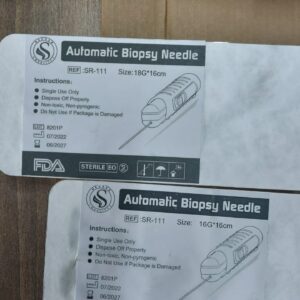
An Automatic Biopsy Needle is a specialized medical device used to obtain tissue samples from internal organs or masses for histological or cytological analysis. It features a spring-loaded, automated mechanism that ensures quick, accurate, and minimally invasive sampling, commonly used in core needle biopsies.
Medstock Supplies
Mama Ngina Street, Transnational Plaza, 2nd Floor, Nairobi
Call/WhatsApp: 0722641512
Follow us on Facebook: https://www.facebook.com/medstockltd
FOR MORE ORDERS GET THEM AT https://medstock.co.ke/product-category/clinical-equipments/
A fetal doppler is a handheld device that uses sound waves to measure a baby’s heart rate. In a hospital setting, a fetal doppler is used for a variety of purposes, including:
A healthcare provider may use a fetal doppler to count a baby’s heart rate during prenatal visits.
A healthcare provider may use a fetal doppler to monitor a baby’s heart rate during labor and delivery. They may also use a continuous Doppler ultrasound device, which attaches to the belly with an elastic strap and sends the baby’s heart rate to a monitor.
A fetal doppler can help identify fetuses that are at risk so that clinical interventions can be applied.
Mama Ngina Street, Transnational Plaza, 2nd Floor, Nairobi Call/WhatsApp: 0722641512